
Why Civics?
Australia is proud of its democracy.
Invented the secret ballot to protect voters' freedom of choice.
Established compulsory voting to maximise participation.
Implemented preferential voting to reflect a holistic view of what voters want.
Yet young Australians’ confidence in our democracy today is in decline.
56%
of young Australians (18-24) are satisfied with Australian democracy.
Our national assessments show civic knowledge in steep decline.
What is civics?

Civics involves knowing your rights and responsibilities as a citizen, how the government and political system works, and how to participate in civic life to help make decisions with your community. In a democratic society, civics involves upholding values such as freedom, equality and the rule of law. It’s not just about turning up to vote: elections may happen once every three years, but there are opportunities to influence decisions and play an active part in society every day.
Why does civics matter?
Having a say.
As a citizen, you deserve to know how the system works, so you can influence things you care about.
Better outcomes.
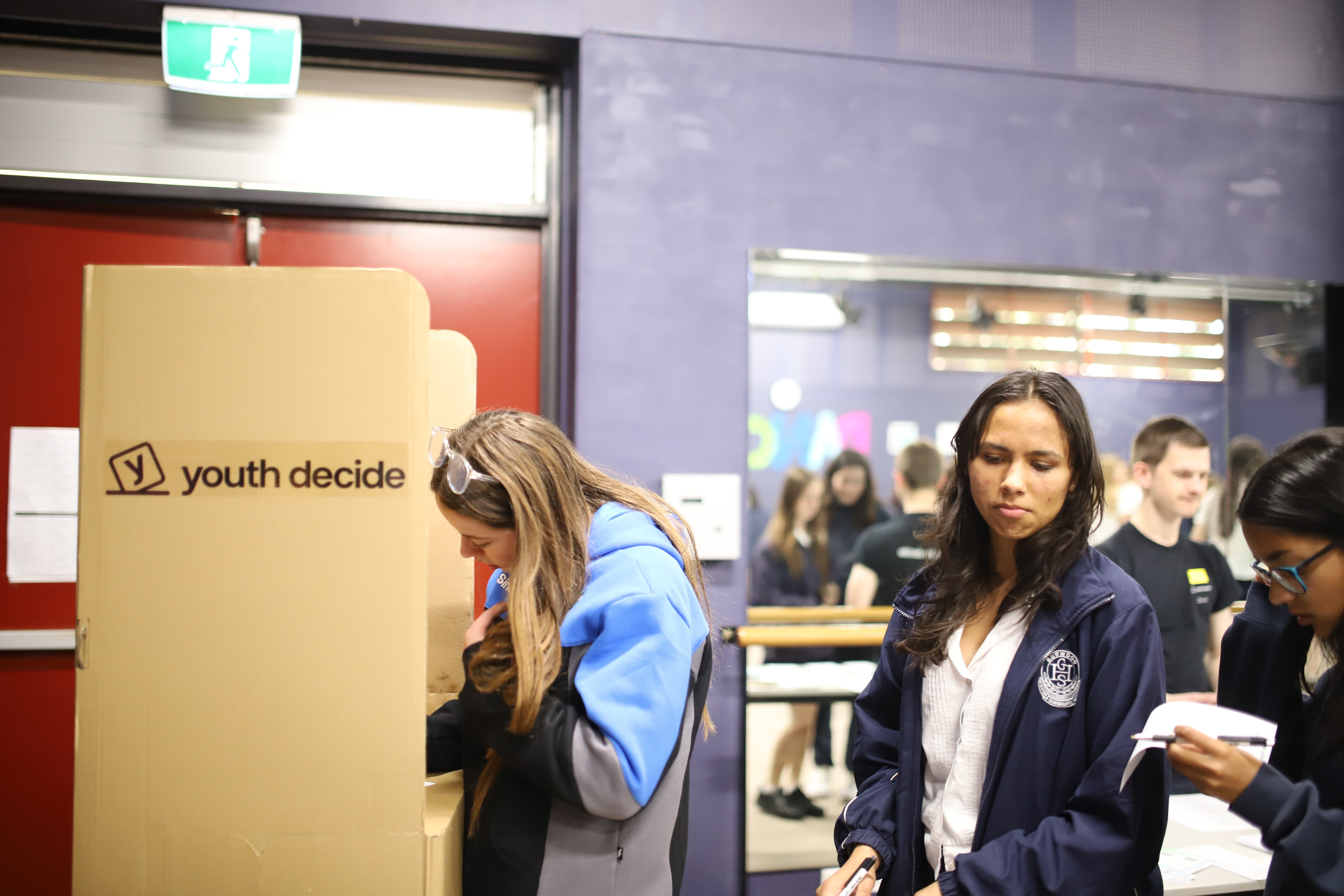
As a society, when we all know how to speak up and solve problems, we all benefit from stronger communities and more responsive leaders. Our workshops are collaborative and practical, allowing students to develop actionable plans that address real issues in their school or community.
Building trust.
Australians trust politicians, government, and democratic institutions less than ever.
Ensuring resilience.

As a country, the values at the heart of our liberal democracy - freedom, rights, equality, rule of law, representation, accountability, participation - are facing new threats, including disinformation, foreign interference and polarised online spaces.
